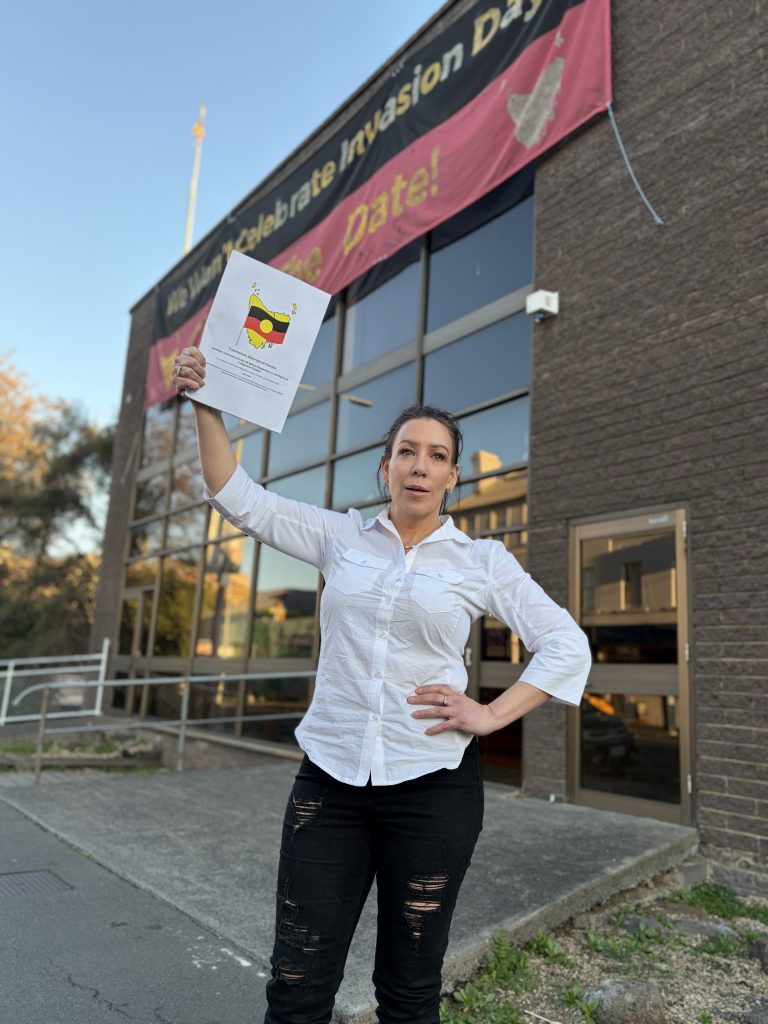
Tasmanian Aborigines have filed a report with the United Nations Special Rapporteur on the rights of Indigenous Peoples, to raise concerns about Aboriginal heritage, as well as the treatment of Tasmanian Aboriginal people by the Tasmanian Government.
The report outlines a pattern of failures affecting Aboriginal rights, justice, cultural protection, self-determination and the community’s ability to grow and thrive on our own terms.
The report highlights the Community’s major concerns, including the treatment of Aboriginal children in the justice system, the Tasmanian Government’s drafting of discriminatory Aboriginal heritage laws, the lack of meaningful progress on Treaty and Truth, the weakening of support for Aboriginal legal advocacy, and the stalling of the return of land and resources to the Tasmanian Aboriginal community.
The TAC said the submission was an important opportunity to ensure the international community hears directly from Aboriginal people in Lutruwita / Tasmania about what is happening here, prior to the Rapporteur’s visit to Australia later this year.
“For too long, Tasmanian Governments have spoken the language of respect while continuing practices that disempower Aboriginal people, deny our rights, and block our ability to determine our own future,” said Nala Mansell, campaigns manager, Tasmanian Aboriginal Centre.
“What we need is not more symbolism, more consultation theatre, or more government-controlled processes dressed up as reform. We need the law to reflect that we are the owners of our own cultural heritage.”
“Our report makes clear that these are not isolated issues. They form part of a broader pattern in which Aboriginal people are denied authority over our heritage, our children, our lands, our justice and our future.”
The report draws attention to the gap between the Tasmanian Government’s rhetoric and the lived reality for Aboriginal people.
Among the issues raised is the treatment of Aboriginal children in detention and the deep concern caused by the secretive transfer of Aboriginal boys from Ashley Youth Detention Centre into Risdon Prison late in 2025. The TAC says this is emblematic of a system that continues to fail Aboriginal children and families.
The report also warns that the Government’s proposed approach to Aboriginal heritage reform risks preserving the same power imbalance that has failed Aboriginal people for decades, rather than recognising Aboriginal ownership, authority and free, prior and informed consent.
The TAC said international human rights standards are clear: Aboriginal people have the right to self-determination, to maintain and control culture and heritage, to participate in decisions that affect us, and to enjoy justice, protection and development on an equal basis.
“The UN Declaration on the Rights of Indigenous Peoples provides a clear measure of success,” said Ms Mansell. “It says Aboriginal people are not to be managed by the State. We have the right to make decisions about our own heritage, our own community and our own future. Yet recognition of the FPIC framework is entirely lacking in Lutruwita / Tasmania.
The TAC said it hoped the Special Rapporteur’s visit to Australia would help shine a light on the treatment of Tasmanian Aboriginal people and increase pressure for genuine reform.
“We want the Rapporteur to hear clearly that Aboriginal people in Lutruwita / Tasmania continue to face systemic injustice. We also want it understood that there is a better path — one based on rights, respect, Aboriginal authority and real support for our community to grow stronger,” said Ms Mansell.
Read our submission below, titled “Summary submission to the UN Special Rapporteur on the Rights of Indigenous Peoples”